
by admin | Apr 19, 2022 | ARCHIVES, NEWSROOM
With the President and many other South Africans, NAPTOSA wishes to extend our deepest condolences to the families of loved ones who lost their lives in the KZN floods. We especially hold the parents, care givers, families and school communities of the nearly 60 learners and education staff members who succumbed, in our thoughts and prayers.
The floods have left devastation in its wake and education in the province has been particularly hard hit with more than 600 schools damaged, more than 100 schools inaccessible at this stage and, according to the President, 270 000 learners affected.
The fact that so many schools are unable to open after the Easter weekend without an indication as to when they will be able to return to normal schooling, means that thousands of learners will lose valuable teaching and learning time that can be ill afforded after the losses suffered during the COVID-19 lockdown measures.
We call on the Department of Basic Education (DBE) and the KZN provincial education department to implement emergency plans to provide temporary classrooms, water and ablution facilities, as needed, to the damaged schools.
The death of learners and education staff members, the general devastation and the damage to schools cannot but psychologically affect learners and staff of the schools involved. The deployment of psycho-social services to these schools is therefore crucial. It is heartening to learn that the provincial education department has already put the necessary wheels in motion to provide such services.
It is lamentable and utterly frustrating that the impact of the floods on the KZN education situation is being exacerbated by the slow progress that the provincial department has been making in addressing the rain damages to schools in the province during December 2021. It is clear that the current situation is unlikely to be effectively salvaged provincially. NAPTOSA therefore welcomes the President’s announcement that the provincial state of disaster has been elevated to a national state of disaster.
We appeal to the DBE and the provincial education department to do a thorough assessment of the impact on schools in the province and to work hand in hand with the relevant national and provincial departments and local authorities to ensure that schooling in the province can return to normality in the shortest possible time.
The disaster has once again firmly put the spotlight on the issue of school infrastructure. As NAPTOSA we call on DBE to develop a national plan to address poor school infrastructure. Granted, damage to schools as a result of a natural disaster cannot be prevented, but such a national school infrastructure plan should incorporate steps to address infrastructure disaster management.
We note that the Eastern Cape has also been affected by flooding. While there is currently no available information on damages to schools, the issues raised above are equally applicable to education in that province.
NAPTOSA is a caring union. We therefore make an appeal on all our members to contribute to the relief efforts by making a R 50-00 donation. With the track record we have in South Africa, it is understood that there would be skepticism on the management and application of relief funds. NAPTOSA, however, believes that as a relief organization “Gift of the Givers Foundation” has, over many years, proven that they have the integrity to do so and that our contributions should be directed to them.
Contributions can be made to any of the following accounts:
Gift of the Givers Foundation
Bank: Standard Bank
Account number: 052137228
Universal code: 051001
OR
Gift of the Givers Foundation Zakaat Account
Bank: Standard Bank
Account number: 052278611
Universal code: 051001
Apart from the general relief needed, there is also a dire need for books for learners. Our NAPTOSA: KZN office is currently making an assessment of the needs in this regard and will later put out a communique on this. It would be appreciated if members could also see their way clear to assist in this matter.

by admin | Apr 15, 2022 | ARCHIVES, NEWSROOM
The 2022 wage negotiations will be commencing soon for purposes of which NAPTOSA needs to determine its demands to feed into those of the FEDUSA block in the PSCBC (of which we are part), and ultimately into a consolidated demand of all the unions to the PSCBC.
To enable NAPTOSA to finalise its set of demands, a survey will be conducted among members. The survey will concentrate on the main issues of a wage demand, namely the term of the agreement and the quantum of the increase, as well as certain other benefit areas.
Term of the agreement
The choice is between a one year or a multi- term agreement. Based on Labour’s experience with the 2018 multi-term agreement where the employer reneged on the final year of implementation and the resultant trust deficit in the employer, a multi-term agreement at this juncture appears risky.
Quantum of the increase
In terms of PSCBC resolution 1 of 2021, public servants receive a non-pensionable cash allowance of between R 1220 and R 1695 p.m., depending on their salary level, to be continued until parties to the PSCBC reach a new agreement on a salary adjustment for 2022/23.
We have warned before that this should not lull us into complacency because it does not constitute a real salary increase. In fact, members have not received a pensionable salary increase for two years on top of which they have to contend with run-away fuel and electricity price increases that are having a knock-on effect on commodity prices. The result is higher inflation (CPI), currently standing at 5,7%.
It is believed that a wage increase should at least mitigate the effect of inflation on the buying power of members whilst making up for the wage losses of the past two years. The projected average CPI for 2022/23 is 4,5% and should form the basis of the wage increase quantum. To demand an additional 2% (bringing the demand to 6,5% across the board) is regarded as not unreasonable, taking into account the current economic climate.
Housing allowance
While the housing allowance (R 1 500.07p.m.) increases annually with the average CPI for the preceding financial year, the baseline amount of R 1 200 p.m. negotiated in 2015 was a compromise position at that stage. It is believed that a housing allowance of R 2 500 p.m. is a more realistic allowance taking into account current house prices and rentals.
Some of the provisions of the Government Employees Housing Scheme have also been problematic from the start. The fact that the full housing allowance, or a portion thereof (depending on when an employee entered the public service), is paid into an individual-linked savings facility for employees who rent, does not alleviate the rental demands of many. While for some this might be a way to save to eventually assist them in purchasing a property, others would rather have the allowance assist them with their rent. It is believed that it would be fairer to all if the savings facility in the housing scheme was to become optional.
The housing allowance was negotiated as a benefit to employees. It is therefore unfair that an employee should forfeit his/her accumulated benefit in the savings facility when he she resigns.
Capped leave
Because of the financial pressures that public servants are under, many need financial assistance to fund expenses in the period before they reach retirement age. It is believed that the employer should allow those employees who have capped leave, to have such leave paid out them in full or in part before retirement. This will be in line with National Treasury’s investigation into the possible limited withdrawal of pension funds to assist workers.
Improved qualifications
Ministers of Public Service and Administration continually allude to the professionalization of the public service. Encouraging employees to improve their qualifications is an important element in achieving this goal, but then it must be made worth the employee’s effort because ultimately the employer and the public service will benefit. It is believed that the improvement of qualifications should therefore be made more attractive to employees. The current benefit of 10% of annual salary, limited to salary level 8.1, therefore needs to be improved.
Filling of funded posts
There are too many funded posts in the public service that remain unfilled, putting pressure on employees who are in service to plug these gaps. The employer needs to commit to the filling of funded vacancies within an agreed time frame. A period of six months should be more than reasonable. As part of the filling of posts, all beginner teachers (Self-funded, Funza Lushaka, ETDP Seta Bursary holders) should be given equal opportunity to access teaching posts.
As indicated above, NAPTOSA’s demands will feed into further Labour structures. It is important to note that in this process of discussions and compromises the demands of individual unions may be adapted or left off the final consolidated Labour demands.
Click on the link to complete the survey: https://forms.gle/n1x1owuQj2PgtNaF8
by admin | Feb 28, 2022 | ARCHIVES, NEWSROOM
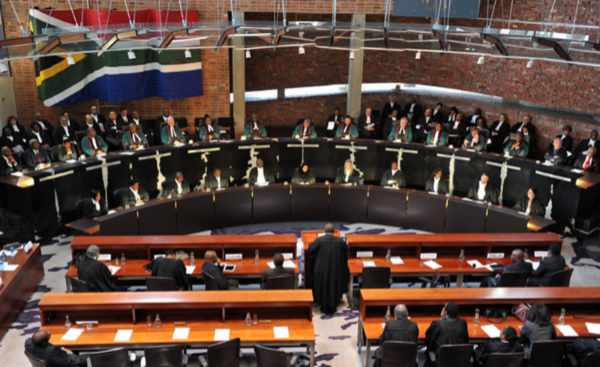
NAPTOSA is shocked by the judgement delivered by the Constitutional Court today that the State as employer was within its rights to walk away from Public Service Co-ordinating Bargaining Council (PSCBC) Resolution 1 of 2018 by not implementing the third leg of the agreement to grant public servant the negotiated salary increases with effect from 1 April 2020.
The judgement means that the employer managed to convince the Court that its negotiators had not fulfilled all the legal mandate requirements for the third year of the agreement before appending a signature on behalf of the employer to the collective agreement.
This flies in the face of good faith bargaining. While NAPTOSA and the other public service trade unions were engaged in negotiations with the employer, believing that their negotiators bargained from a mandated position, the employer always kept an ace up their sleeve. By having a multi-layered mandating process, the employer was always in a position to argue that one or the other mandate had been lacking. It was impossible for the unions to know whether the employer’s negotiators had the requisite mandates or not.
Although the employer won the court case, they have lost the trust of the unions to the PSCBC. In a single act (not to implement the agreed salary increase for 2020) the employer managed to dismantle the trust relationship that had been built between the public service trade unions and the employer over a period of more than 20 years since the inception of the PSCBC.
While we are unhappy with the outcome of the judgement, we are nevertheless glad that it came before the Collective Bargaining Summit, arranged by the PSCBC, is to take place from 28 to 30 March 2022. The issue of trust is sure to dominate proceedings at the Summit.
What NAPTOSA finds really frustrating is that, although the employer argued the non-implementation of the 2020 salary increase on a mandating technicality, we all know that it stems from a National Treasury austerity approach. The Minister of Finance, in comments to the press, attributed the “unacceptable” size of the public service wage bill to above inflation salary increases over a number of years. This is astonishing because it purports that the employer did not play any role in this. Or is the Minister arguing that those increases (which we dispute were excessive) were also not properly mandate on the employer side?
Salary negotiations for 2022 is to commence shortly in the PSCBC. The employer can be assured that the losses suffered by public servants from 2020 will feature strongly in the negotiation process.

by admin | Feb 11, 2022 | ARCHIVES, NEWSROOM
As is the case with budget speeches, the maiden Budget Speech, 2022, of the current Minister of Finance, Minister Enoch Godongwana, contained a number of positive elements, but also a number of aspects that concern us.
As expected, the Minister allocated substantial funding for the economic recovery programme announced by the President in his recent State of the Nation Address. NAPTOSA is a firm believer that economic recovery is the only way out of the cycle of poverty and unemployment that is gripping our country. It is also pleasing to see government envisaging greater utilisation of public-private partnerships to support infrastructure projects.
But setting aside funding for infrastructure investment will only show an impact on these societal afflictions of poverty and unemployment if the money is used sagely, circumspectly and corruption free.
NAPTOSA expects the President to give detailed feedback to the nation in the next SONA on the impact of the recovery programme and we will be closely watching the unemployment numbers to see if there is any tangible evidence that the programme is showing success.
Unfortunately, the funding of the economic recovery programme comes at a cost to other programmes. While the funding for education over the Medium-Term Expenditure Framework (MTEF) period remains one of the largest items in the national budget (R 28,5b in 2021/22 to R 31,4b in 2024/25) and will increase by an average of 3,3 %, it is not nearly enough to address inter alia the issues of overcrowding in schools, insufficient number of new schools erected and inadequate maintenance of school infrastructure brought about by the budgetary cuts forced on education departments the past few years.
It feels that we are continually treading water in education, not really making progress. Funding for planned infrastructure maintenance gets watered down by the annual infrastructure regression due to vandalism and destruction of school property, exacerbated last year by the protest action in KZN and Gauteng.
We have in the past called for funding to be set aside to once and for all eradicate water and sanitation backlogs in schools. While we welcome the funding set aside for the provisioning of water to 50 schools and safe sanitation to 450 schools in this budget, we are disappointed that the Minister, as the new broom, did not take the bold step to provide funding for the total eradication of these backlogs.
The Minister’s announcements regarding public service remuneration are both confusing and disturbing. It is not clear what the additional allocation of R 24,6b to provinces to compensate for the shortfall in teacher’s compensation refers to, but it apparently does not mean additional money for teachers.
The additional R 20,5b set aside to meet the cost implications of the 2020/21 public service wage agreement is worrisome because it means that government did not have sufficient funds in last year’s budget to fund the agreement. This obviously seriously impacts available funding for this year’s wage negotiations.
The announced annual increase in employee compensation of an average of 1,8% over the next three years also does not bode well for salary negotiations. The Minister referred to the upcoming Collective Bargaining Summit on 28-30 March 2022, arranged by the PSCBC, expressing the hope that it will give stakeholders an opportunity to engage on building a sustainable public service and remuneration guidelines. NAPTOSA will be participating in the Summit. The Minister is mistaken to think that his allocation for wage increases will not cast a shadow over the Summit.
We appreciate the Minister’s decision to grant some personal tax relief, grant an increase in medical credits, not tamper with VAT and to refrain from increasing the fuel and Road Accident Fund levies. Workers already suffer greatly from food and fuel inflation, higher interest rates and economic hardships brought about by the pandemic. We also welcome the increase in social grants and the allocation for the extension of the social relief for disaster grant.
NAPTOSA remains cautiously supportive of the restructuring of the retirement system for individuals that could possibly allow employees to make limited withdrawals from their pension funds. We await the publication of the draft legislation in this regard. We would also need to see what the impact of such a proposal would have on the GEPF. Fortunately, this would be a matter that would need to be flighted in the PSCBC, where we would have a proper opportunity to view all the details.
The announcement of the continued support to keep ESKOM financially sustainable to the tune of R 88b over the next three year, while understood, is hard to swallow, especially in view of ESKOM’s current application to NERSA for a 20,5 % tariff increase. We urge government to speed up the process of paving the way for alternative power generation.
The announcement by the Minister that charges have been brought against a company Director and a Gupta associate involved in the corrupt ESTINA dairy project, smacks of deflection of the broader corruption issue. What about the involvement of politicians?
We trust that the positive elements of the budget speech, that will bring some financial relief to workers, will not be usurped by the employer’s approach to the 2022 wage negotiations.

by admin | Feb 11, 2022 | ARCHIVES, NEWSROOM
NAPTOSA welcomes the frankness with which President Cyril Ramaphosa in his State of the Nation Address (SONA) 2022, confronted the problems facing our country, and outlined plans to tackle them. The speech conveyed a sense that, more than before, there is a serious commitment to get South Africa back on track.
We agree that poverty, unemployment and inequality are unacceptable components of our society. The extension of the R 350 p.m. Social Relief of Distress Grant is therefore supported as well as the fact that work will be done during this period to come up with a viable replacement. The placement of 10 000 TVET graduates in workplaces from April 2022, and the revitalized National Youth Service that envisages the creation of 50 000 youth employment opportunities are positive steps but will unfortunately not make a dent in our youth unemployment rate of 75%. The President’s call for the exclusion of experience as a prerequisite for jobs to assist new graduates is wholeheartedly endorsed as this will greatly assist the youth with sustainable jobs.
While these initiatives are welcomed, it is clear that the only real way out of the unemployment challenge is through strong economic growth. It was therefore encouraging to hear a President for the first time acknowledge that business, and not government, creates jobs and that business is often hamstrung by too many regulations that are complicated, costly and difficult to comply with.
The mobilization of social partners – government, labour, business and communities – to create a comprehensive social compact over 100 days to focus on growing the economy, creating jobs and combating hunger is an ambitious project. We are fully supportive of this initiative and as part of FEDUSA expect to play our part in the establishment of this compact.
We agree with the President that infrastructure is a critical cog in our economic recovery. The plans announced for improving our electricity supply (unfortunately previous announcements on this have come to naught), improving water delivery (especially important to schools), upgrading rural road infrastructure, improving the operational efficiencies of our ports and revitalizing our rail transport system, if these can be achieved, will go a long way in supporting our economic recovery. Let’s hope and pray that these plans will come to fruition as well as the plans to restore the health of State-owned Enterprises. We welcome the fact that there is to be an exercise to determine which of these entities are to be retained, consolidated or disposed of and to minimize political interference in them.
We are concerned that the President mentioned a school infrastructure delivery program only briefly. In this day and age, it is sad that the country’s schools are characterized by crumbling infrastructure and overcrowded classrooms. Many of these schools, infringe on the very constitutional rights that the President made reference to. NAPTOSA calls on the Minister of Basic Education to focus on addressing these pertinent issues.
We welcome the President’s position that all individuals and companies responsible for state capture must now be held to account. We hope to see swift action by the prosecution authorities. We also await the President’s indication that he will by 30 June 2022 present a plan of action in response to the Zondo commission’s recommendations.
Another positive commitment from the SONA is the empowerment of women as well as the promise to intensify the fight against Gender Based Violence. These are issues that NAPTOSA is extremely passionate about
The President’s firm commitment to switching off analogue broadcasting is positive after too many delays. Successful conclusion will enable considerable enhanced networks and could lower the cost of data as well as close possible gaps between the haves and the have nots.
On climate change, it was pleasing to learn that South Africa’s climate targets are now compatible with the international requirement to limit warming to 1,5°.
As expected, COVID-19, its impact on the economy and society and the successes in combating the pandemic to the point that there is an intention by Government to lift the State of Disaster, again received considerable attention, especially the role of the vaccination program. As a stout vaccination supporter, NAPTOSA was pleased to hear the President, even in a personal testimony, give credence to the role that vaccinations played in saving the lives of many people.
In closing his address to the nation, the President called on all stakeholders to forge a consensus to unite behind a shared determination to reform and rebuild our country. The President can count on NAPTOSA.

by admin | Feb 11, 2022 | NEWSROOM
Unlike 2020 and 2021 we have a positive start to the 2022 school year with the announcement by Cabinet on 31 January 2022 that changes to Adjusted Alert Level 1 of the COVID-19 regulations have been approved, inter alia the resumption of schooling to fulltime learning in all schools.
NAPTOSA has for a considerable time been agitating for the return to school of all learners on a daily basis and the discontinuation of rotational school attendance in order to arrest the further loss of teaching time. We therefore welcome the decision of Cabinet.
To accommodate the overcrowding pressures experienced by many schools, Cabinet’s decision is accompanied by a total relaxation of the 1-meter social distancing requirement in schools. Whilst this is an inevitable consequence of a full return to schooling, it does not mean that there should be a let up on maintaining the other essential elements of the non-pharmaceutical COVID prevention measures. The compulsory wearing of mask and the sanitation regimes need to still be strictly adhered to by staff and learners in schools.
We, however, caution the Department of Basic Education (DBE) not to allow the social distancing relaxation to now rest on their laurels in urgently addressing the issue of overcrowding in schools. The Department has already missed an opportunity during the pandemic period to tackle this grave problem. If the Department was able, in a short space of time at the start of the pandemic, to provide water infrastructure (albeit water tanks in many instances) to school that did not have these facilities, they surely could have done something during the last 2 years to alleviate the overcrowding of schools. What is needed is a constructive plan from the DBE going forward and the Department can be sure that NAPTOSA will be there to constantly remind them of their obligation in this regard.
We can ill afford to return to a situation where schooling is again disrupted due to a resurgence of infections because of overcrowding in schools and the non-adherence to the COVID protocols.
The disruptions in schooling the past two years have had a serious impact on school attendance. It is therefore imperative that, as we return to a pre-pandemic schooling system, all role players in education work together to re-inculcate the culture of regular school attendance as a primary priority.
NAPTOSA fully supports catch-up programmes to make up for the loss of teaching time, but believes that not all elements of the curriculum lost during the pandemic period were necessarily calamitous. It has caused education to focus on the most fundamental elements such as reading, maths and science and this has been positive.
While supporting catch-up programmes, it needs to be balanced with the prevention of teacher burn-out. NAPTOSA believes that in many instances unrealistic expectations have been placed on teachers in regard to catch-up programmes. We will raise this matter when we meet with the Minister tomorrow to discuss the implementation modalities of a return to fulltime learning in all schools.
NAPTOSA’ stance on vaccination (unapologetic pro-vaccination) is well known. We therefore encourage parents of children that fall within the cohort that qualifies to be vaccinated, to ensure that their children do so. Similarly, we call on all education staff to vaccinate. We are seeing arbitration awards coming out of the CCMA finding that employers have not committed an unfair labour practice in requiring employees to be vaccinated.
